Labyrinths & Mandalas
Ancient forms of sacred geometry as tools for walking meditation, psychological integration, and spiritual centering.
The Path Inward
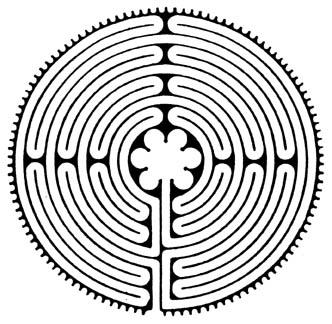
The labyrinth is a very old design, over 4,000 years old, with the earliest known actual labyrinths around 1,200 years old. There are many different styles of labyrinth — the Cretan style is among the most ancient and recognizable.
Labyrinths are not mazes. Mazes trap and trick; labyrinths are a tool for walking meditation. They wind you into a center without any obstacles, and then allow you to return. The entrance to the labyrinth is called the mouth. When you walk it, you meander back and forth, turning 180 degrees as you enter a different circuit. The center is called the goal — and when you reach it, you reverse your steps, unwinding from the center out.
I always think of the labyrinth as a metaphor for life, as well as therapy. Our center is always present — the place around, to, and from, which we travel. In fact, we are always "there." The whole path of the labyrinth takes place within a circle; and circles are symbols of wholeness, for they have no beginning or end.
Many people think that the pattern of this labyrinth looks like a brain. In fact, walking the labyrinth balances the left and right sides of your brain, and induces a centered and calm state of being.
I created the labyrinth on the home page with the help of five friends and a couple of dogs over two windy days on a hill in Central Park, NYC. It was made just after 9/11 in 2001.
The Archetype of Wholeness
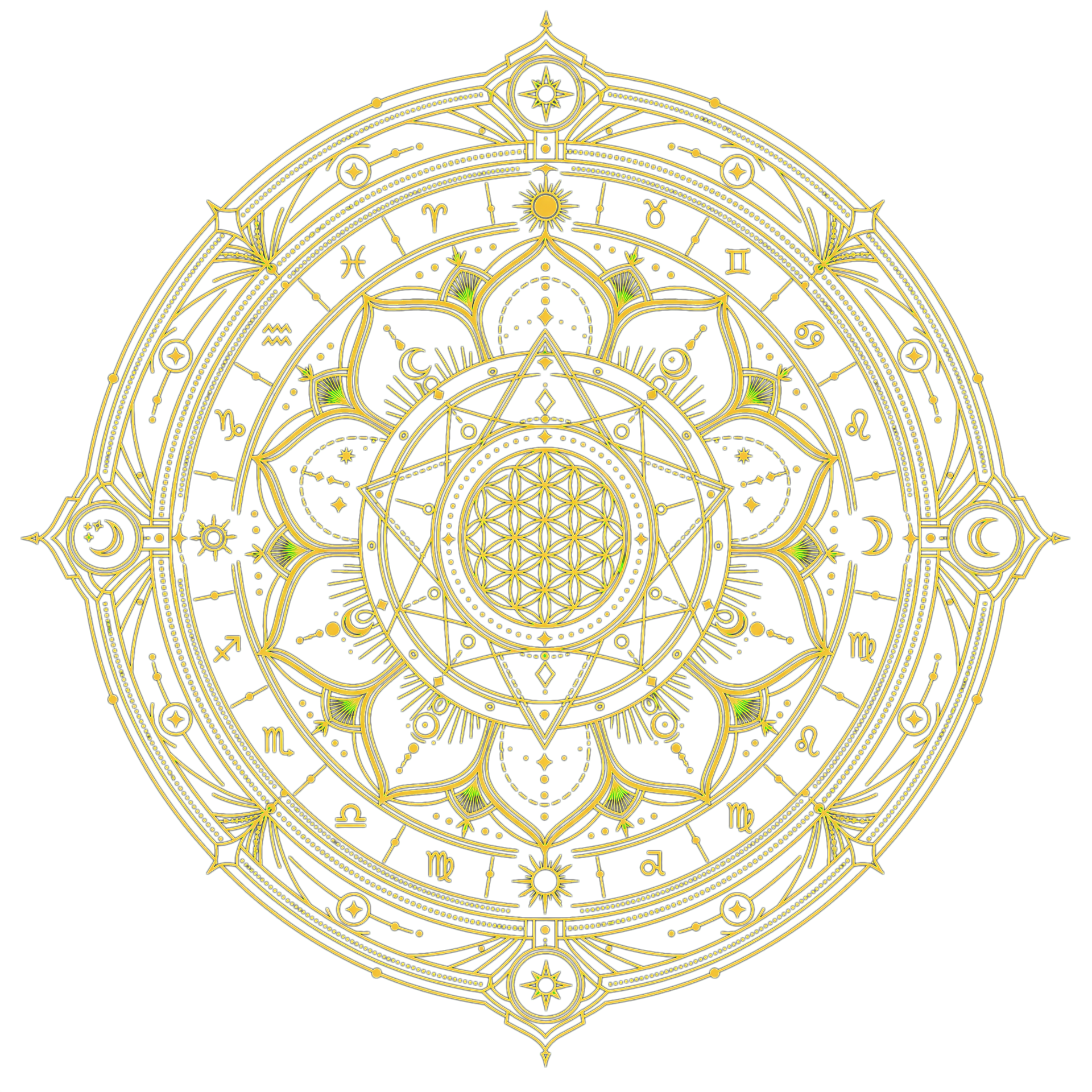
Mandala is the Sanskrit word for circle — but it is a very special kind of circle; it encompasses circumference, perimeter, and center. Mandala has become a word synonymous with sacred space. Their very presence in the world reminds the viewer of the sacred in the universe and in oneself.
Structurally, it is a combination of a circle and a squared form, usually a variation on a cross. Whenever we deal with a form or concept that integrates the circle and a four-pointed theme, we are in a mandalic space. The four points symbolize time and space — the equinoxes and solstices, the four seasonal turning points, the four directions. The circle with no beginning and no end is a symbol for the eternal whole which contains time and space.
Jung stated that the mandala is the archetype of wholeness, relating it to the Self.
Mandala work is very useful in therapy. I have used mandala work with many different kinds of people — from psychiatric inpatients to high-functioning workshop participants — and witnessed its power to unify and center.
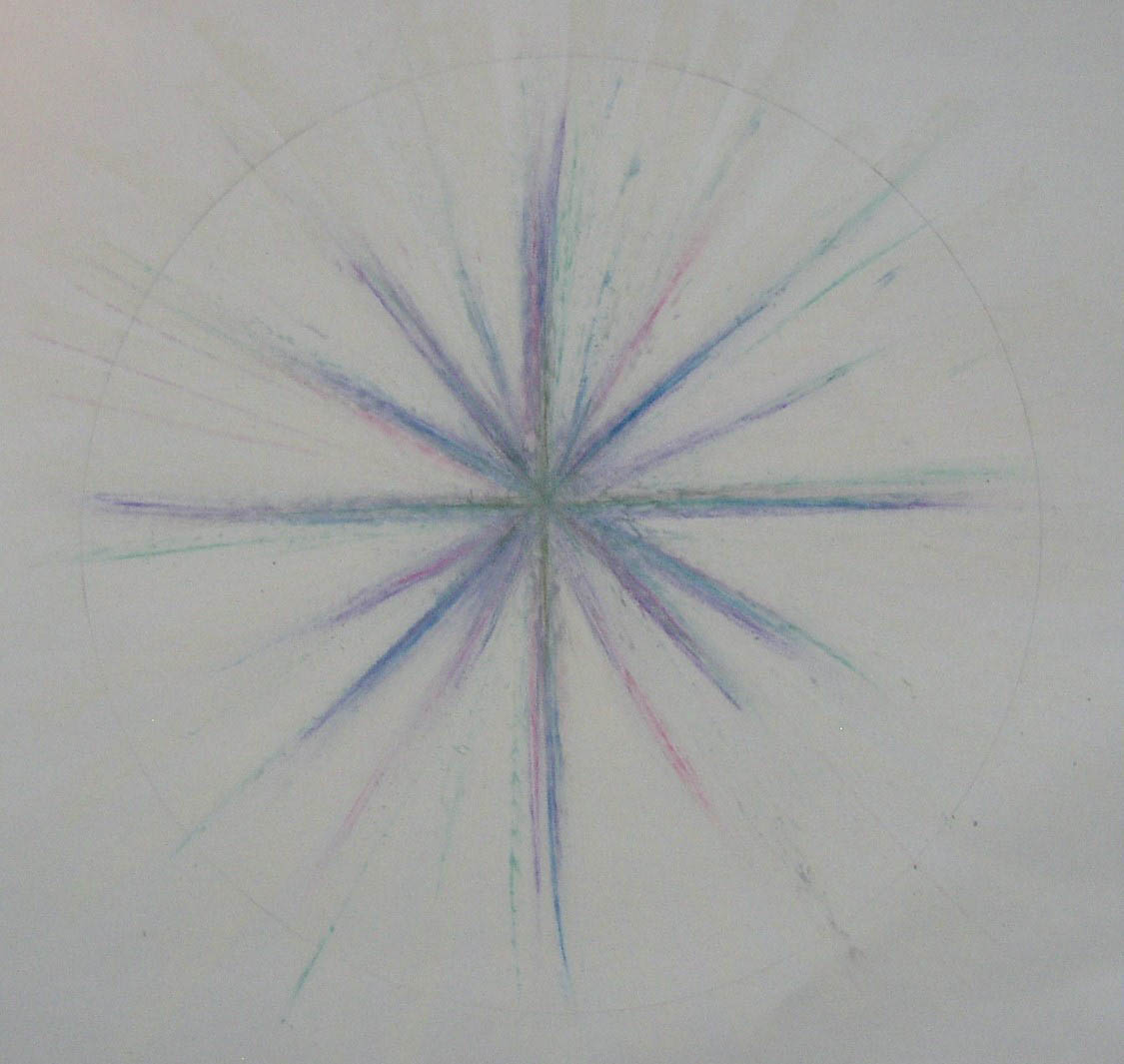
How to Create Your Own Mandala
- Take a piece of paper — whatever size feels right to you.
- Draw a circle in the middle; you can use a large dinner plate as a template.
- Take a set of colors, sit in front of the circle, and relax.
- Let yourself be drawn to a color, and start with that.
- Follow whatever imagery comes up, in color, line, form, or image.
- Trust your intuition to tell you when you are finished.